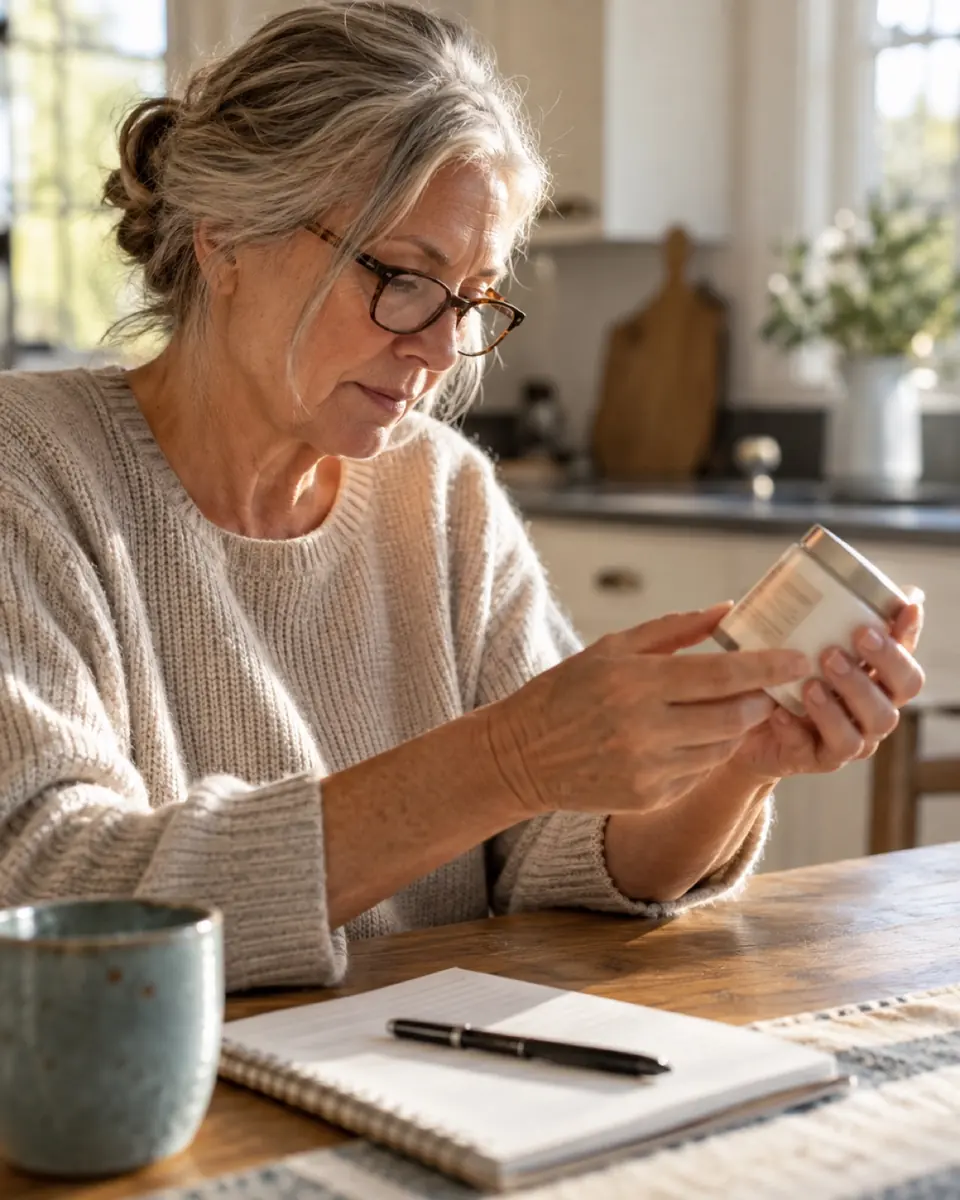
If you take one buying habit away from this site, make it this: read the lab report before you buy CBD. CBD products are not reviewed by the FDA before they are sold, so the lab report, called a Certificate of Analysis or COA, is the best way to see what is actually in the product. It looks technical at first. Once you know where to look, it takes about two minutes.
What a COA is
A Certificate of Analysis is a report from a testing laboratory about one specific batch of a product. The brand sends a sample to the lab, and the lab measures what is in it. A good brand tests every batch and makes those reports easy to find, often with a QR code printed right on the label.
Step 1: Match the batch number
Find the batch or lot number on your package. Then find the batch or lot number on the report. They should match. A report for a different batch tells you about someone else's jar, not yours. If there is no batch number on either one, that is a red flag.
Step 2: Check who did the testing, and when
Look at the top of the report for the laboratory's name, address and contact information. You want an independent, third-party lab, not the brand's own in-house testing. Many reputable labs are accredited to a standard called ISO/IEC 17025, which you may see printed on the report. Also check the test date. A report that is several years old probably does not describe what is on the shelf today.
Step 3: Compare the CBD amount to the label
Find the line for CBD (sometimes written as cannabidiol) in the potency or cannabinoid section. Labs report results in different units, so you may need to do a little arithmetic:
- mg per unit or per package: the easiest. Compare it directly to the label.
- mg/g: milligrams of CBD in each gram of product. Multiply by the product's weight in grams.
- Percent (%): 1% equals 10 mg per gram.
Here is a made-up example to show the math. If a 50-gram balm reports 20 mg/g of CBD, then 20 × 50 = 1,000 mg in the jar. The result should be reasonably close to what the label claims. A big gap in either direction is worth a question to the brand.

Step 4: Read the THC lines
Next, find the THC results. You may see several lines, such as delta-9 THC, THCa and total THC. A few abbreviations come up again and again:
| You see | It means |
|---|---|
| ND | Not detected. The lab did not find a measurable amount. |
| LOD | Limit of detection. The smallest amount the lab's method can detect. |
| LOQ | Limit of quantitation. The smallest amount the lab can measure reliably. |
| <LOQ | Something may be present, but below the amount the lab can measure reliably. |
| mg/g, % | Concentration units. 1% equals 10 mg per gram. |
What you should expect depends on the product type you chose, which brings us to the next step.
Step 5: Look at the other cannabinoids
The cannabinoid table often lists other compounds, such as CBG, CBN or CBC. This section tells you what kind of product you really have:
- CBD isolate: CBD is the only cannabinoid detected. The others read ND.
- Broad spectrum: CBD plus other cannabinoids, with THC at trace or non-detectable levels.
- Full spectrum: CBD plus other cannabinoids, including a small amount of THC.
Make sure the report matches the label. If a product says "isolate" but the report shows several other cannabinoids, or the other way around, ask the brand to explain.
Step 6: Check the safety panels
Some reports include extra tests beyond potency. Common panels include:
- Heavy metals, such as lead, arsenic, cadmium and mercury
- Pesticides
- Residual solvents left over from extraction
- Microbials, such as mold, yeast and bacteria
- Mycotoxins
Each panel usually shows a result and a "pass" or "fail." Not every report includes every panel, so note which tests were run. If a panel you care about is missing, it is fair to ask the brand whether it was tested.
Red flags to watch for
- No batch number, or a batch number that does not match your package
- No lab name, or testing done by the brand itself
- A report that is years old
- A blurry, cropped or edited image instead of the full report
- CBD results far from what the label says
- Spectrum results that contradict the label
- A brand that will not share reports when asked
How K61 does it
Every K61 batch is tested by an independent third-party lab, and every report we receive is published on the K61 Lab Results page. The QR code on each label takes you to the report. K61's two topicals, Recovery Standard and Recovery Concentrate, are made with CBD isolate. Resilience Rounds gummies are broad spectrum. You can use the six steps above to check any of them.
A lab report tells you what is in a product. It does not tell you whether a product is right for you. That is a conversation for your doctor or pharmacist, and it is worth bringing the report along.
Talk to your doctor first, especially if you take medications
CBD can affect how some other medicines work. Before you try any CBD product, bring the label (and its lab report) to your doctor or pharmacist and ask whether it makes sense with everything else you take.
This article is for general education and is not medical advice. These statements have not been evaluated by the FDA. K61 products are not intended to diagnose, treat, cure, or prevent any disease. For adults 21+.